How does Deposit Guard work?
How is this different from my landlord's inventory?
Do I need my landlord's permission?
Will deposit schemes accept Deposit Guard?
When should I create a report?
Is Deposit Guard free to use?
Deposit Guard lets you create your own independent record of your rental property’s condition at the beginng and end of your tenancy.
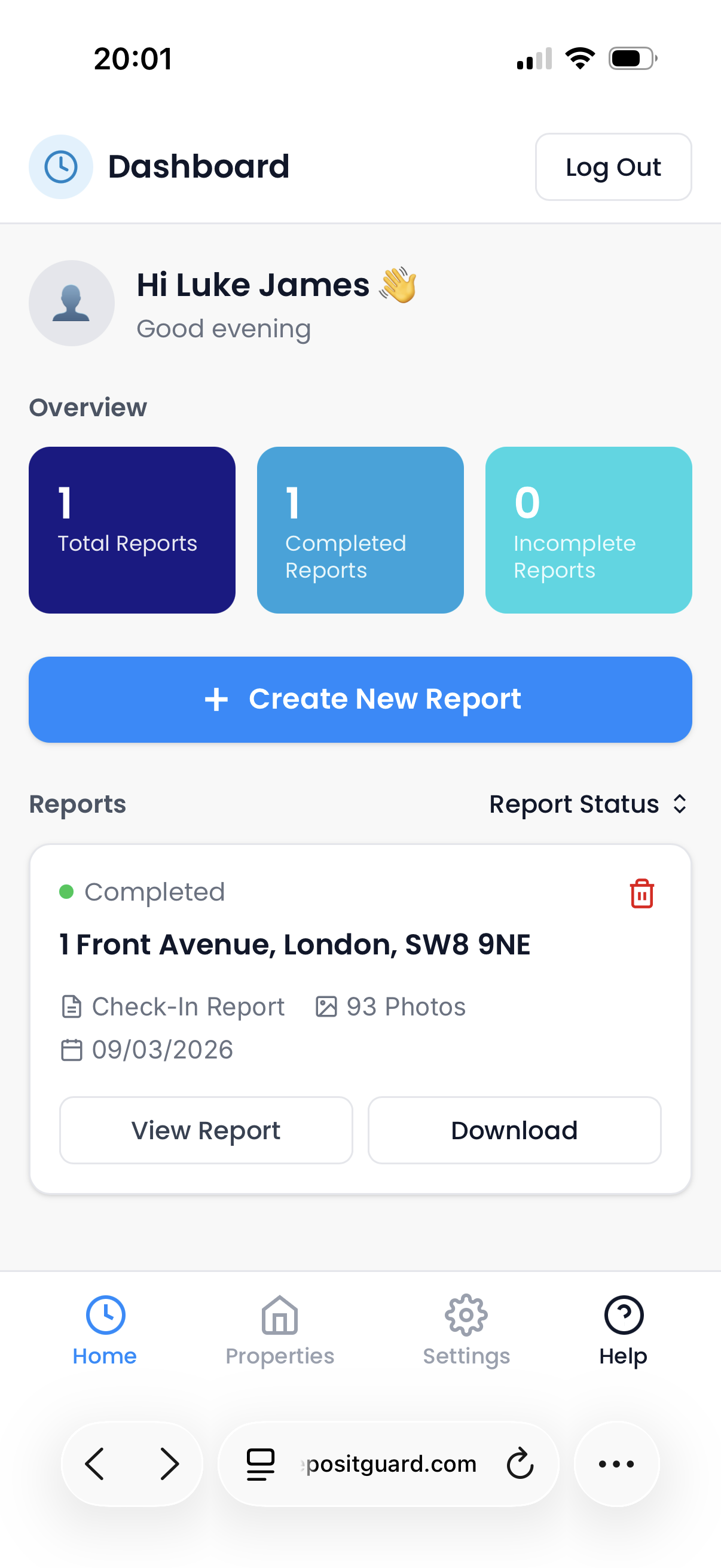
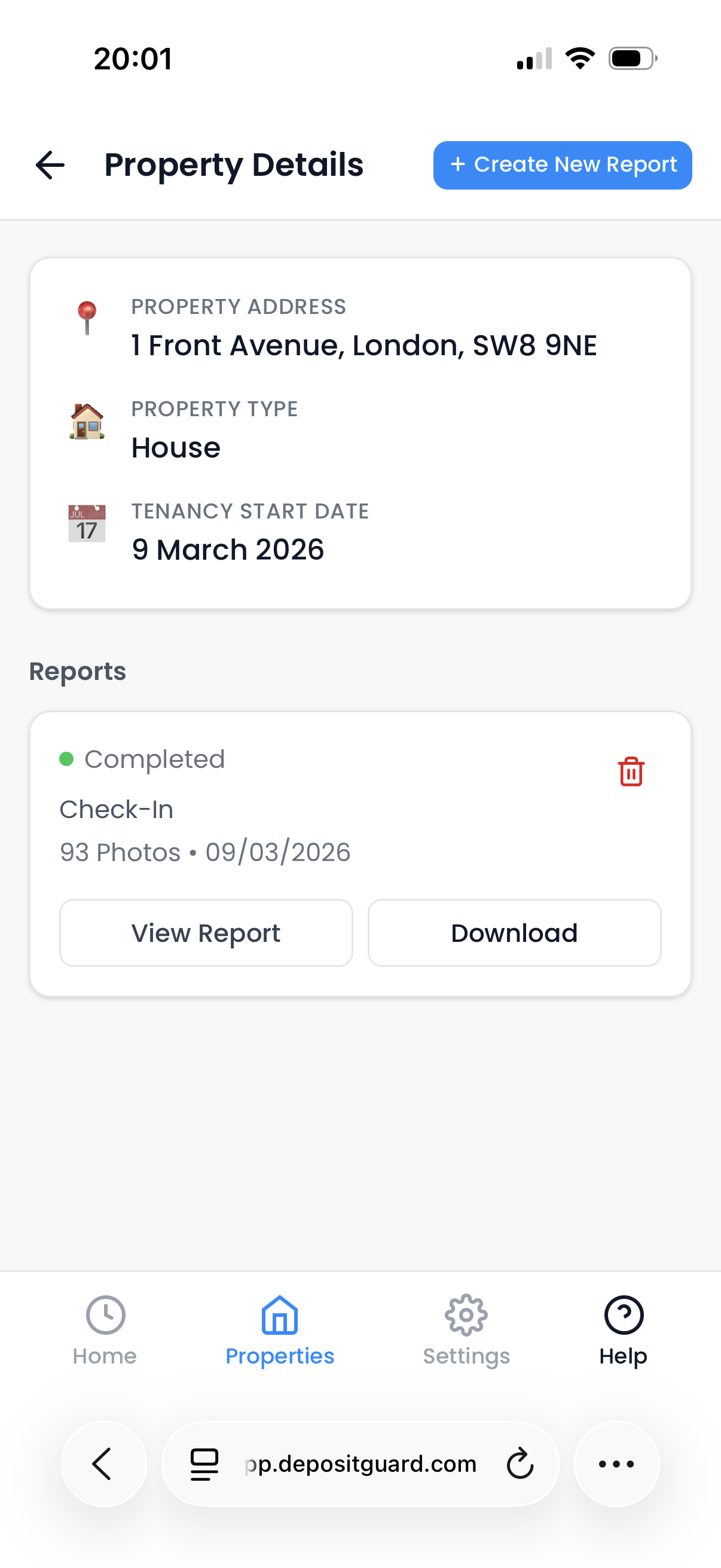
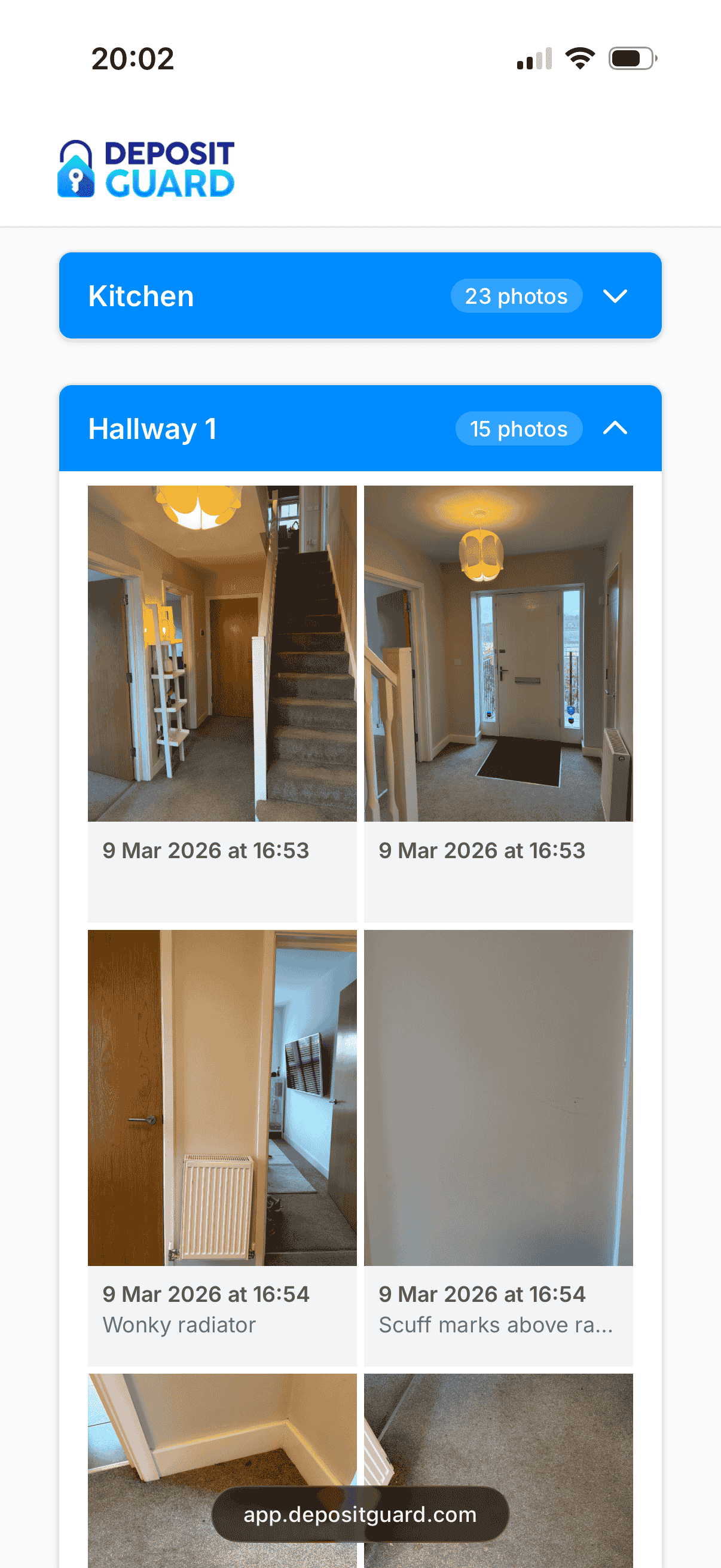
You walk through the property using your phone, room by room, taking photos and adding short notes wherever something isn’t perfect — marks, damage, wear, or anything you want to flag. Photos are captured in-app and automatically time-stamped, so there’s a clear record of when the evidence was created.
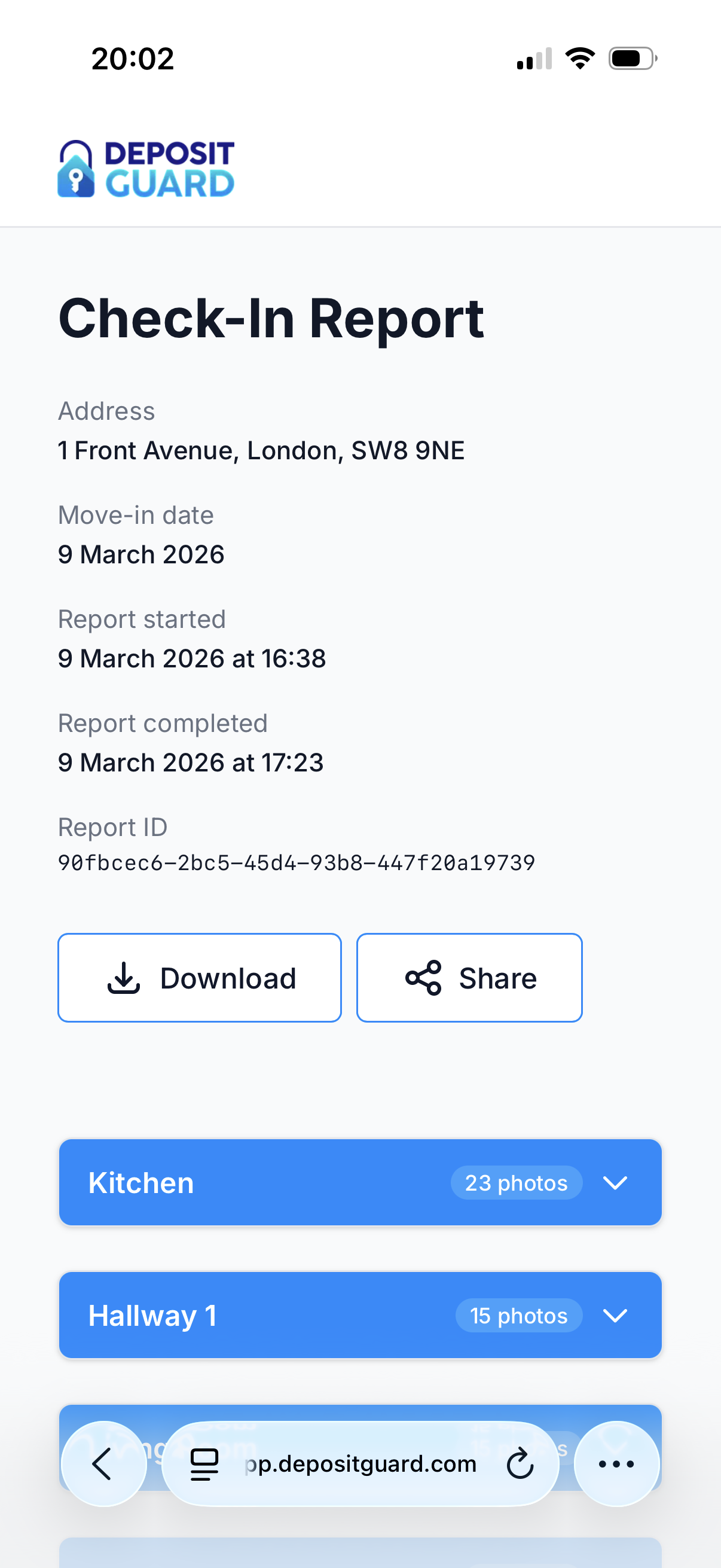
Once you’re done, Deposit Guard generates a professional, read-only PDF report that organises everything by room and locks the evidence in place. That report is yours to keep, share, or submit if a deposit dispute ever arises.
Most landlord or letting agent inventories are created for the landlord's benefit, and often without you present. They’re written from one perspective, and if a dispute happens, that inventory usually becomes the “official” version of events. Deposit Guard flips that dynamic.
Instead of relying on someone else’s report, you create your own independent record of the property’s condition, using time-stamped photos and your own notes. You’re not disputing their inventory, but backing yourself up with evidence that stands on its own. This matters because deposit disputes are evidence-based. When tenants lose, it’s usually because they don’t have proof.
Deposit Guard doesn’t replace deposit protection schemes or prevent landlords from doing their own inventories. It simply ensures that you’re no longer starting from a position of zero evidence if something is challenged later.
No, you're not required to tell your landlord or letting agent that you’re using Deposit Guard or seek their permission to do so.
Deposit Guard is a tool for creating your own independent record of the property’s condition. Just like taking photos on your phone, you’re documenting the state of the property for your own protection.
Your report is private by default. Your landlord or agent can only see it if you choose to share it with them. If you do decide to share the report and your landlord chooses to ignore it, that doesn’t make the evidence invalid. In the event of a deposit dispute, what matters is whether your evidence is clear, not whether the other party agreed with it at the time.
Deposit Guard simply ensures that you’re able to submit your own version of the property’s condition, rather than relying solely on someone else’s inventory.
In short, yes.
The only thing that deposit schemes care about when assessing deductions is the quality and credibility of evidence provided by both sides. That includes things like photographs, timestamps, written notes, and whether the evidence clearly shows the property’s condition at the start or end of the tenancy.
Deposit Guard is designed around those exact requirements. Reports are made up of in-app photos, clear annotations, and verified timestamps, all compiled into a report that’s easy to submit as part of a dispute.
This doesn’t guarantee the outcome of any dispute — no tool can — but it does mean you’re submitting structured, time-stamped evidence rather than loose photos or memories after the fact.
You should create your report as close to moving in as possible, ideally on the day you get the keys and before you unpack or start using the property. That’s when the condition of the property is easiest to document, and when the evidence is most useful if something is later disputed.
If you can’t do it on the exact day, it’s still worth creating a report as soon as possible afterwards. Time-stamped photos taken early in the tenancy are far more credible than evidence created weeks or months later.
Deposit Guard can also be used when you move-out, especially if you want a clear record of the condition you left the property in. Some renters choose to keep both a move-in and move-out record so there’s evidence at both ends of the tenancy.
Yes — it’s free to sign up and start building a report.
You can add your property, define rooms, take photos, and add notes without paying anything. That way, you can see exactly how the process works before committing.
When you’re ready to lock everything and generate your final, read-only report, there will be a small, one-time fee. This covers turning your photos and notes into a secure, time-stamped document that can’t be edited later. Your report is then stored in your Deposit Guard account and can be accessed at any time.
There’s no subscription and no ongoing charges. You only pay at the point where the report is generated.